
Drive past a large builder's community and you will often see a rate on the sign that is well below the market. That rate is not luck, and it is not only for builders with their own mortgage company. It usually comes from a forward commitment.
01What a forward commitment is
A forward commitment lets a builder reserve mortgage money at a set rate today, for buyers who will close during a future window. The builder pays up front to secure that pricing. Buyers who finance through the program and close inside the window get the committed rate, even if market rates rise in the meantime.
For a builder, that turns the rate into something you can plan and advertise, instead of something you hope holds until completion day.
02Flex Forward: rate, closing costs or both
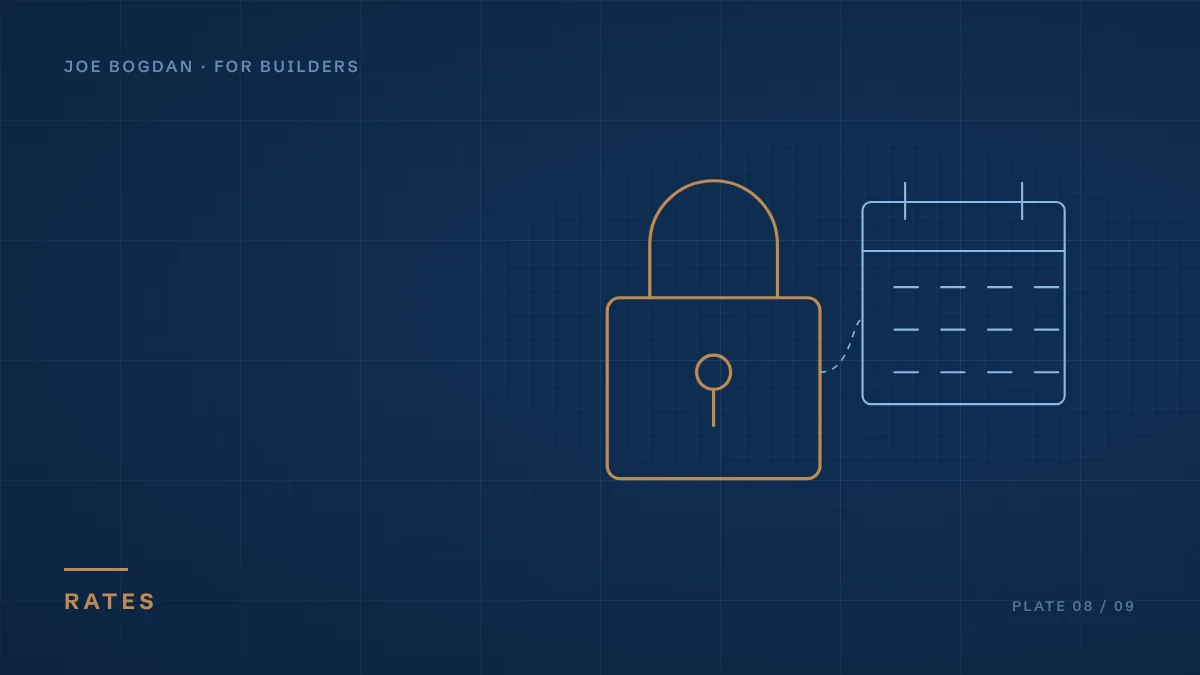
Forward commitments are available to builders, including a flexible option called Flex Forward. It lets a builder direct the incentive money to rate reductions, closing costs or a mix of both, and it pairs with the extended rate lock, which allows locks of up to 12 months on new construction.
The Flex Forward Playbook
How forward commitments work, and how Flex Forward splits your incentive between the rate and closing costs.
03When it makes sense
- You have a phase of homes finishing over the next several months.
- Your buyers are payment-sensitive, and you are tired of price cuts that do not move them.
- You want a rate you can put on the sign and in the listing, not a promise to "talk to our lender."
04What to ask before you commit
- What does the commitment cost, and when is it paid?
- How long is the window, and what happens to money a buyer does not use?
- Which loan types are eligible?
- What can you advertise, and with what disclosures?
Pricing, minimums and windows change with the market, so get current terms in writing before anything else. And remember that a commitment is not an approval. Every buyer still applies on their own, and every buyer is free to choose their own lender.
The big builders set the rate before the home is finished. You can too.